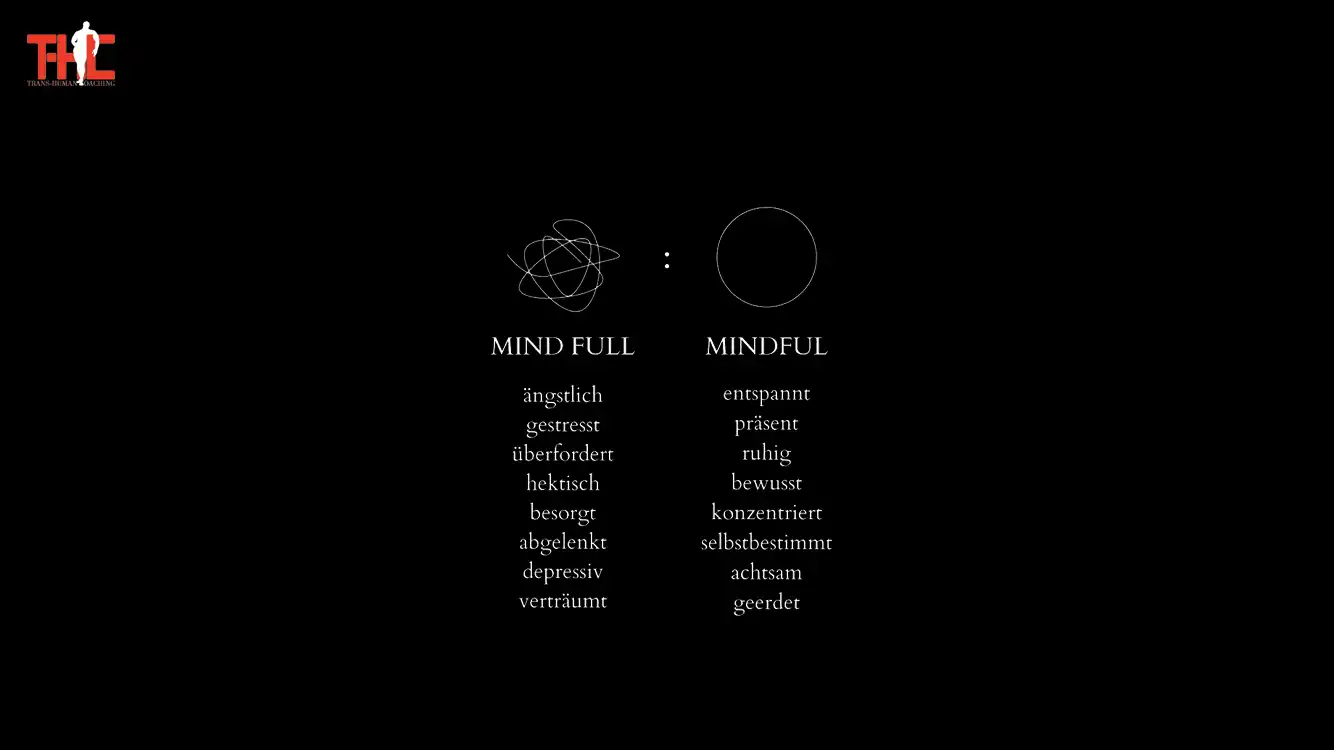

Meditation, like MBSR, is a form of mental training born from the meeting between contemplative traditions and modern neuroscience, it teaches the brain to regulate the flow of thoughts, reduce stress, and improve focus. It is an active practice, not an escape, training the mind to stay present in the body and to observe without reacting.
Over the last decades, guided meditation has become a core part of Mindfulness-Based Stress Reduction (MBSR), a program developed in 1979 by biologist Jon Kabat-Zinn at the University of Massachusetts Medical School.
MBSR combines meditation, body-scan, and mindful breathing with solid clinical foundations, now used in hundreds of hospitals and research centers worldwide.
In short – what are MBSR and Meditation
- What it is: a guided awareness practice that trains mind and body to stay present without judgment.
- Method: breathing, observing, accepting, and returning to the present moment.
- Origin: integrated in the MBSR program by Jon Kabat-Zinn, validated by over forty years of scientific research.
- Benefits: reduction of anxiety and stress, increased clarity, emotional balance, and resilience.
Table of Contents
Scientific origins of MBSR
When Kabat-Zinn introduced MBSR in the late 1970s, the goal was to translate the principles of meditation into a language accessible to Western medicine.
His approach combined breath awareness, body-scan, and nonjudgmental attention structured into an eight-week program. Since then, more than 600 scientific studies indexed on PubMed have documented the benefits of MBSR for anxiety, depression, chronic pain, and post-traumatic stress.
Within this context, guided meditation serves as an “attention gym,” a safe space where the brain learns to move from automatic reactions to conscious responses. According to the American Psychological Association, regular mindfulness practices improve executive function, working memory, and emotional regulation while reducing physiological markers of stress.
What guided meditation is and how it works
While MBSR specifically works with awareness without reaction and breathwork, Guided meditation is a wider definition; it’s a practice that uses the voice, live or recorded, as an attentional anchor. The guide helps direct focus toward sensations, breath, and bodily perceptions, leading the mind into a state of greater presence and self-regulation. MBSR can be offered in the process of Guided Meditation, both work on the same premise that instead of “silencing thoughts,” meditation teaches you to observe without following them, allowing the brain to gradually deactivate automatic stress and control responses.
Neuroscience confirms that during meditation, the functioning of brain networks changes, particularly those related to attention, emotion, and self-awareness. Studies published in Scientific Reports show that activity in the default mode network (the wandering-mind network) significantly decreases, while coherence and connectivity between the prefrontal cortex and the insula increase, key areas for interoceptive awareness and emotional regulation.
In simple terms, guided meditation teaches the brain to stay in the body rather than in thought. When attention repeatedly returns to breath, sensations, or the guiding voice, the nervous system enters the parasympathetic state, dedicated to rest and repair. In this mode, cortisol levels drop, heart rate slows, and the mind regains clarity.
What distinguishes guided meditation from other forms is its structure. The presence of an external voice reduces cognitive dispersion and temporarily quiets overcontrol, making it easier for fast or anxious minds to access deep calm. This is why the American Psychological Association considers guided mindfulness one of the most effective practices for managing modern stress.
- The guide provides progressive instructions, such as: breathe, perceive, accept, let go.
- The brain responds by reducing limbic activity (emotional reactions) and increasing cortical connectivity.
- The body relaxes through parasympathetic activation and the release of oxytocin and serotonin.
- The result is a state of calm alertness, not passive but clear and centered.
In this sense, guided meditation and MBSR are true neurophysiological self-regulation protocol. They are a mental gym where you learn to observe without reacting, to feel without escaping, and to let the mind return to a dynamic balance (what neuroscience calls cognitive homeostasis).



Neurophysiological and scientific benefits of meditation
When we talk about the benefits of meditation, this is no longer theory or spirituality, it is empirical science. Decades of research, from Harvard Medical School to the Massachusetts General Hospital, show that regular practice alters both structure and function of the brain, positively influencing stress, attention, emotion, and even immunity.
Meditation acts on the autonomic nervous system, promoting activation of the parasympathetic branch (rest and regeneration) and reducing the overstimulation that drives anxiety, overthinking, and chronic tension. It is a neurovegetative reset restoring balance between mind and body, similar to the effects of deep sleep or effective recovery after training.
- Reduced amygdala response: less automatic reaction to stress and perceived threats (NIH).
- Increased prefrontal cortex activity: stronger cognitive control and sustained concentration (Frontiers in Human Neuroscience).
- Activation of insula and anterior cingulate cortex: improved interoception and emotional awareness (PNAS).
- Parasympathetic regulation: slower heart rate, deeper breathing, lower cortisol (MDPI).
- Improved brain connectivity: better integration between limbic and cortical regions (Nature Scientific Reports, 2024).
- Default Mode Network (DMN): the network of rumination and self-referential thought, reduced through mindfulness (PubMed).
- Dorsolateral executive network: strengthens focus and metacognition, helping notice thoughts without following them (NIH, 2020).
- Insula and anterior cingulate: key areas for body awareness and empathy, crucial for emotional regulation (NeuroImage).
These effects are not theoretical; they are observable after only a few weeks of regular practice. A review published in Psychosomatic Medicine found that even 10–20 minutes of daily meditation lowers blood pressure and improves heart rate variability, both direct markers of psychophysical resilience.
With consistent practice, the brain develops functional neuroplasticity: neural pathways linked to calm and focus become more accessible while those of chronic stress weaken. This change is measurable with fMRI after only eight weeks of daily practice.
It is not passive relaxation, it is active brain training. The more your mind resists, the more it can evolve, because meditation rewires exactly the circuits that struggle to let go.
To understand how these practices connect to behavioral science, explore our page on Behavioral Neuroscience.
Measurable benefits according to research
- Reduced cortisol and anxiety: JAMA Internal Medicine reports significant stress reduction after eight weeks.
- Improved sleep: Sleep Medicine Reviews confirms better sleep quality in MBSR participants.
- Greater emotional resilience: APA notes reduced depressive symptoms and increased perceived well-being.
- Parasympathetic activation: mindful breathing stimulates the vagus nerve, enhancing physiological calm response.
These results make guided meditation a recognized intervention in health psychology, increasingly used clinically to address anxiety, burnout, insomnia, and chronic pain.
Guided meditation, mindfulness, and modern life
In a hyperconnected world, guided meditation is a form of mental hygiene rather than spirituality. It is a practical response to cognitive overload and constant distraction. Through short, regular sessions, it trains the ability to stay centered even amid intense stimuli, a real advantage for those who live by multitasking and rapid decision-making.
Quick definitions
- Guided Meditation
- A practice led by a voice that directs attention to breath, body, or visualization, helping the mind reduce rumination and regulate the autonomic nervous system.
- Mindfulness
- A state of intentional and nonjudgmental awareness of the present moment. It is the foundation of MBSR and MBCT programs.
- MBSR (Mindfulness-Based Stress Reduction)
- An eight-week clinical program created by Jon Kabat-Zinn at the University of Massachusetts Medical School. It combines meditation, body-scan, and mindful breathing to reduce stress and anxiety.
- Neuroplasticity
- The brain’s ability to modify neural connections through experience and repetition. Guided meditation strengthens circuits linked to calm, focus, and resilience.
- Default Mode Network
- A brain network associated with automatic thinking and rumination. Mindfulness practices decrease its activity, improving concentration and mental clarity.
- Neurophysiological resilience
- The ability of the nervous system to quickly shift from activation (stress) to relaxation (calm). It is a measurable indicator of psychophysical balance that can be trained through consistent practice.
In summary, guided meditation and MBSR offer a scientifically validated model of attention training and emotional self-regulation. It is an ancient practice that neuroscience now confirms as one of the most effective strategies for preventing chronic stress and fostering conscious personal growth.
👉 To explore the experiential aspect, read the next article, How to improve guided meditation, mental resistance and focus.
FAQs
What’s the difference between guided meditation and mindfulness?
Guided meditation is a practice led by a voice that directs attention to breath, body, or visualization. Mindfulness is the underlying attitude — the ability to be aware of the present moment without judgment. In other words, mindfulness is the mental quality that guided meditation cultivates (APA).
Who created MBSR and why is it considered scientific?
Mindfulness-Based Stress Reduction (MBSR) was developed in 1979 by biologist Jon Kabat-Zinn at the University of Massachusetts Medical School. It is considered scientific because hundreds of controlled clinical studies have demonstrated its effectiveness on stress, anxiety, and depression.
How long do I need to meditate to see results?
Research shows that practicing for 10–15 minutes a day is enough to start observing measurable improvements, especially with consistency. An eight-week daily routine reduces perceived stress and improves sleep quality (Frontiers in Psychology).
Can guided meditation help with anxiety and stress?
Yes. The American Medical Association documented a significant reduction in cortisol and anxiety symptoms among participants in MBSR programs. Guided meditation activates the parasympathetic nervous system, lowering the alert response and improving self-regulation.
Do I need a teacher, or are meditation apps enough?
Apps can be a good starting point, but they cannot replace a qualified instructor or coach who can adapt the practice to your specific needs. The difference lies in personalization and feedback — an experienced teacher can help you overcome mental blocks or resistance that an audio guide cannot detect.
Are there side effects or risks?
Guided meditation is generally safe, but in some cases it can bring up repressed emotions or feelings of vulnerability. When this happens, it’s best to practice with a professional trained in clinical mindfulness. The key principle is gradual practice — the goal is not to force calm, but to build it progressively.
Is guided meditation suitable for people with an “overactive mind”?
Absolutely. Analytical and fast-thinking minds tend toward cognitive hyperactivity and constant planning. Guided meditation is particularly helpful because it provides an external structure — the voice and the rhythm — that progressively deactivates control circuits and allows natural presence to emerge.

Comments and Questions
0 Comments