
What is success? How to feel successful? And what if the problem is not that you are failing… but that your old definition of success no longer fits who you have become?
This is one of the central themes I explored in my interview on the Leadership in Transition podcast. In the conversation, I’ve discussed with my colleague Laurent Maillefer discussed something many people experience but struggle to name: you can reach your goals, build a career, create stability, and still feel that something is missing.
This article expands on that interview and answers some of the most common questions people ask around this topic: what is success, how to be successful, why success does not feel satisfying, how purpose affects fulfillment, and how to redefine success when life changes.
In short — Success, purpose and fulfillment
- Success and fulfillment are not the same thing.
- Your definition of success can stop fitting who you are.
- Dopamine drives pursuit more than lasting satisfaction.
- Misalignment often hides behind “everything looks fine.”
- Purpose emerges when values, talents, and identity align.
- Journaling and reflection help redefine success consciously.
Table of Contents
The Neuroscience of Success: Why Success Doesn’t Always Feel Like Success
Most people think success should produce a clear emotional reward: relief, pride, satisfaction, pleasure, peace.
But that is not always what happens. Sometimes success feels strangely flat. Sometimes it feels temporary. Sometimes it even creates confusion. You finally get what you wanted, and instead of feeling complete, you find yourself asking:
Is this it?
That question does not mean you are broken, ungrateful, or incapable of appreciating what you have. In many cases, it means your inner definition of success has changed, while your outer life is still following an older script.
What Is Success?
Success is not an absolute fact. Success is a psychological and emotional construct shaped by your upbringing, your environment, your values, your nervous system, and your life stage.
For one person, success may mean financial independence. For another, it may mean peace, freedom, intimacy, impact, creativity, or coherence. The problem is that many people never consciously define success for themselves. They inherit a ready-made version from culture, family, work environments, or social expectations.
That is why someone can spend ten or twenty years chasing a goal, reach it, and realize they were pursuing a version of success that no longer reflects who they are.
How to Be Successful: The Answer Most People Miss
If you search for how to be successful, you will usually find advice about discipline, habits, mindset, confidence, productivity, and consistency. Some of that is useful. But it misses a deeper point.
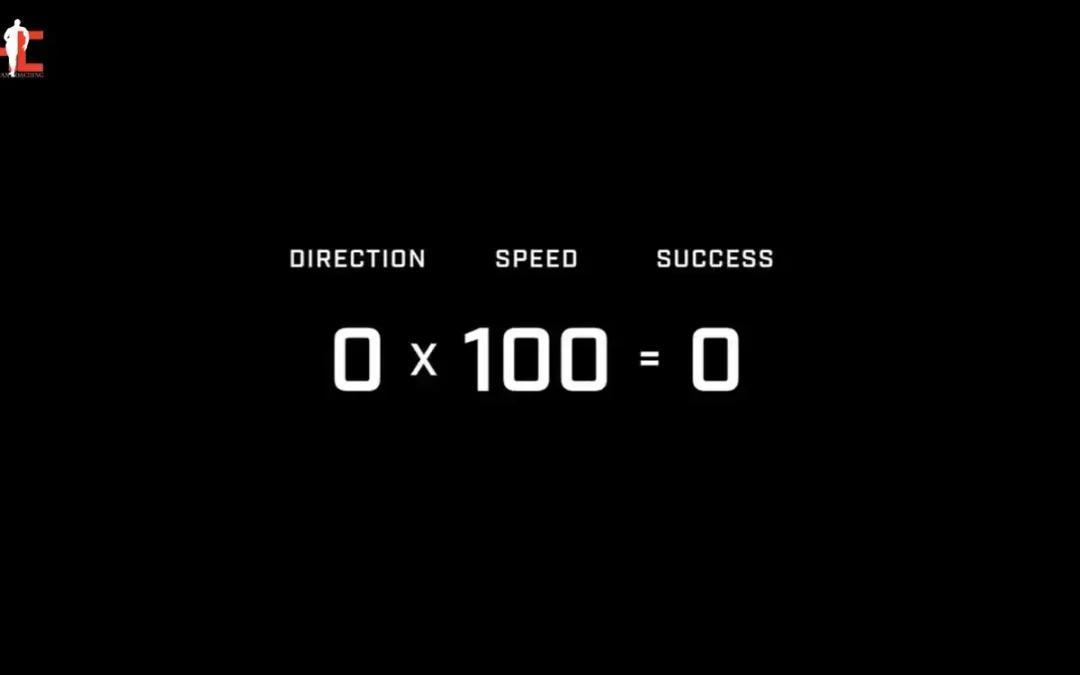
You can become highly effective at pursuing the wrong goal. Personally, I’ve been a specialist at that for over 10 years of my life!
Real success is not just about achieving outcomes. It is about achieving outcomes that are aligned with your values, your identity, and the kind of life you actually want to live.
So a more accurate answer to “how to be successful” would be this:
- Define success for yourself, not just according to external expectations
- Understand what truly motivates you
- Identify where your life is out of alignment
- Build goals that reflect who you are now
- Stop confusing performance with fulfillment
Why Success Doesn’t Feel Good Anymore
In the interview, Laurent mentioned how in coaching, one of the most common patterns we see is not dramatic collapse, but subtle emotional disconnection. A person says some version of:
Everything is fine on paper, but I do not feel good in my life.
This may show up as:
- Feeling emotionally flat after reaching a goal
- Losing pleasure in things that once mattered
- Feeling like life is on autopilot
- Not knowing what to aim for next
- Questioning a career path, relationship, or identity that used to make sense
- Feeling successful from the outside, but not from the inside
This does not automatically mean something is wrong with your life. It often means there is a misalignment between what you do, what you feel, and who you are.
The Three Dimensions Behind Fulfillment
A useful way to understand this is through three interconnected dimensions of human experience, which is the central aspect of the Three Dimensional Coaching method to which I’ve specialized and certified as a coach. These three dimensions are:
1. Who you are
This includes your identity, values, deeper motivations, temperament, and personal truth.
2. What You Think and Feel
This includes your inner dialogue, emotional reality, beliefs, and interpretations.
3. The actions you take
This includes your behavior, habits, work, routines, lifestyle, and visible outcomes.
When these three dimensions are aligned, people tend to experience more coherence, satisfaction, and grounded motivation. When they are not aligned, they often experience stress, numbness, confusion, or a persistent sense that their life no longer fits.
👉 Modern life pushes many people to live almost entirely in the third dimension: doing. Doing more, achieving more, producing more, proving more, buying more, owning more… but if what you do is disconnected from what you feel and who you are, performance alone will not create fulfillment.



The Neuroscience of Success and Motivation
From a neuroscience perspective, part of the confusion around success comes from how the brain’s reward system actually works.
Many people casually talk about dopamine as if it were the chemical of pleasure. That is not the most useful way to understand it. Dopamine is more accurately tied to motivation, anticipation, pursuit, and reward prediction.
In practical terms, dopamine helps drive you toward something you want. It is active in the craving, the effort, the pursuit, the anticipation. It gets you moving toward the goal.
That is one reason why the chase can feel so energizing, while the actual achievement may feel less emotionally intense than expected. Your nervous system is built not simply to feel satisfied, but to keep orienting toward what comes next.
This matters because if you define your entire life around pursuit, you may become very good at chasing without becoming good at experiencing, integrating, and enjoying.
Why Goals Stop Working After You Reach Them
A goal can be real, valid, and worth pursuing…and still become obsolete for your current self.
You may have set a goal in a moment of life when you needed safety, stability, money, recognition, or independence. Then you reach it. But now your deeper needs have changed. Maybe now you want peace, purpose, authenticity, freedom, intimacy, creativity, or emotional depth.
If your life is still organized around an outdated definition of success, you may feel confused by your own lack of enthusiasm. In reality, your system may simply be telling you that the old target no longer represents your real needs.
Success and Purpose: What Is the Connection?
People often ask: What is my purpose?
In my experience, purpose is not something mystical that appears fully formed. More often, purpose becomes clearer when you understand three things:
- What matters to you deeply
- What comes naturally to you
- What kind of contribution feels meaningful to you
Purpose tends to emerge when your values, talents, and identity start pointing in the same direction.
That is why purpose and success are linked. If your success is built in a way that ignores your purpose, it may look impressive but feel hollow. If your goals are connected to who you are and what you genuinely care about, success becomes more sustainable and more satisfying.
External Validation vs Internal Validation
One of the biggest psychological traps around success is the need for external validation. External validation is not inherently bad. We are social beings. Feedback matters. Recognition matters. Belonging matters.
But if your sense of worth depends mainly on what other people think of your achievements, you create a fragile system. It tends to generate:
- Pressure
- Performance anxiety
- Impostor syndrome
- Fear of losing status
- Chronic comparison
Internal validation is different. It means learning to evaluate your life in a way that is not totally dependent on applause, approval, or social comparison.
I know, this isn’t so easy as just writing about it. In fact, internal validation can initially feel uncomfortable or even lonely. But it is also where deeper stability begins. The more your life is aligned with your own values and identity, the less you need constant proof from the outside that you are allowed to feel worthy.
Signs You Are Successful but Unfulfilled
If you are wondering whether this applies to you, here are some common signs of misalignment:
- You have built a life that looks good, but you do not enjoy living it
- You feel emotionally numb, flat, or disconnected from your achievements
- You keep moving the goalpost without ever feeling “there”
- You feel trapped in a role that once made sense
- You have stopped asking what you actually want
- You function well, but without passion, pleasure, or meaning
- You are measuring your life by outcomes rather than by coherence
If this resonates, the solution is not necessarily to throw everything away. Often, the real work is more subtle: clarifying what is out of alignment and rebuilding from there.
How to Redefine Success in a Healthier Way
Redefining success does not mean becoming passive, unambitious, or detached from goals. It means building a version of ambition that is coherent with your real self.
A useful starting process is this:
1. Identify Your Current Definition of Success
Write down what success currently means to you. Be honest. Do not write what sounds noble. Write what is actually driving you.
2. Ask Whether It Is Still Yours
Did you choose this definition consciously? Or did you inherit it from family, culture, work, or fear?
3. Clarify Your Core Values
What is non-negotiable to you now? What truly matters? What kind of life feels compatible with your identity?
4. Recognize Your Natural Talents
What do you do well naturally? Where do you feel most alive, useful, and engaged?
5. Rebuild Goals Around Alignment
Set goals that are not only measurable, but meaningful. Goals that fit both your nervous system and your identity.
How Leadership Changes When Your Success Is Aligned
This topic also has direct implications for leadership.
When a person is deeply dependent on external validation, leadership often becomes performative. They may become more rigid, more controlling, more threatened, and more identified with status or authority.
When a person is more aligned internally, leadership tends to become steadier and more human. They are less obsessed with proving themselves and more capable of focusing on what actually matters: helping people do their best work, creating coherence, and supporting growth.
Aligned leadership tends to create:
- Less defensiveness
- Less impostor-driven control
- More trust
- More inspiration
- More human-centered decision making
This matters because success in work is never only individual. Misalignment at the top can spread through a team. Alignment can too.
What to Do If You No Longer Feel Successful
If you are in a phase where something feels off, the first step is not panic. It is observation.
Try this:
- Notice what feels emotionally flat or disconnected
- Write down your thoughts without censoring them
- Ask what has changed in you over the last few years
- Clarify your current values and priorities
- Look for where your life may be running on an outdated script
Approach the process with curiosity instead of judgment. Often, these moments are not signs of failure. They are signs of transition.
Podcast Interview: The Neuroscience of Success
I discussed these themes in more depth during my interview on the Leadership in Transition podcast, where we explored how success changes over time, why fulfillment and achievement are not the same thing, how the reward system influences motivation, and how leaders can show up more effectively when they are internally aligned.
If you want the full conversation, you can listen to the episode here:
Listen to the podcast episode on Spotify
Final Thoughts: Success Must Be Redefined as You Evolve
Success is not a single destination you reach once and for all. It is something you will likely need to redefine multiple times across life.
Your goals may change. Your values may deepen. Your nervous system may stop responding to what once motivated you. Your understanding of meaning may become more precise.
That is not failure. That is growth.
The more your definition of success reflects who you truly are, what you value, and how you want to live, the more likely it is that success will not only look good from the outside—but actually feel right from the inside.
Further Reading
If you want to go deeper into these themes, you may also find these resources useful:
- Mental Coaching: what it is and how it works
- Neuroscience and behavior change
- Life coaching and personal growth
- Stress, mental clarity, and modern digital life
- Sex coaching, identity, and self-understanding
Frequently Asked Questions About Success, Purpose, and Fulfillment
Why does success not feel good anymore?
Success may stop feeling good when your goals are no longer aligned with your current values, identity, or deeper needs. From a neuroscience perspective, the brain is also designed to pursue rewards more intensely than to remain satisfied after reaching them.
What is success in psychology?
In psychological terms, success is not purely external. It is influenced by meaning, fulfillment, self-definition, emotional regulation, motivation, and how well your life aligns with your personal values and identity.
How can I define success for myself?
Start by clarifying your values, your natural strengths, and what genuinely matters to you now. Then compare that to the goals you are currently pursuing. A useful question is: “Is my current definition of success truly mine?”
Can you be successful and still feel empty?
Yes. External achievement and internal fulfillment are not the same thing. Someone can have status, money, career progress, or relational stability and still feel disconnected, emotionally flat, or misaligned.
What is the link between purpose and success?
Purpose helps make success sustainable and meaningful. When your goals are aligned with your values, talents, and identity, success is more likely to feel fulfilling rather than empty or purely performative.
Does dopamine make people successful?
Dopamine supports motivation, anticipation, and goal pursuit. It plays an important role in how people chase rewards, but long-term fulfillment depends on much more than dopamine alone. Alignment, emotional health, values, and meaning matter too.
What should I do if I feel lost after reaching my goals?
Pause and reflect before forcing a new goal. Journaling, self-observation, clarifying your values, and discussing the issue with a qualified coach can help you understand whether you are dealing with burnout, misalignment, or a deeper life transition.

Comments and Questions
0 Comments