

In neuroscience, how you focus on your goals shapes the way your brain encodes and retrieves them. Motivation is not just a mindset; it is a neurobiological process built on repetition, emotional salience, and associative links.
The brain continuously tags experiences, emotions, and contexts with associative markers that determine how strongly they influence future behavior (Frontiers in Behavioral Neuroscience). This mechanism — sometimes called neurotagging — is the foundation of habit formation, emotional memory, and state-dependent performance.
Instead of treating goals as abstract concepts, neurotagging embeds them within the neural circuits responsible for attention, emotion, and action. By repeatedly linking a desired internal state with cues and positive affect, the brain begins to treat that state as familiar and rewarding (NCBI). In practice, this reduces friction, minimizes distraction, and makes high-quality focus more accessible.
This article explains how neurotagging works, why it is supported by cognitive neuroscience, and how to apply it in daily life to align your nervous system with your goals — making progress less about willpower and more about design.
In short – how to use Neurotagging
- Neurotagging = associative encoding: your brain binds cues, emotions, and goals into a retrievable “state.”
- Emotion strengthens tags: emotionally salient states are stored more deeply and retrieved more easily.
- Consistency builds pathways: repetition activates Hebbian plasticity (“neurons that fire together wire together”).
- Environmental cues matter: place, time, and rituals act as triggers for high-performance states.
- Goal-states become defaults: with repetition, focus and action feel more automatic and require less effort.
Table of Contents
What Is Neurotagging?
Neurotagging describes how the brain encodes experiences through interconnected neural networks. Every action, thought, or emotion is stored with contextual markers — sensory cues, emotional tone, and internal state — that determine how easily it can be recalled (PubMed).
If studying is repeatedly linked to anxiety, the brain tags the entire context with tension. If instead it is paired with calm focus or structured breaks, the emotional tag changes. Over time, this process shifts which state becomes the brain’s default response (NCBI).
This illustrates the core idea: you can deliberately condition the emotional and cognitive state your brain associates with a goal. Neurotagging transforms productivity from a fight against resistance into a trained response.
The Science Behind Goal-Tagging
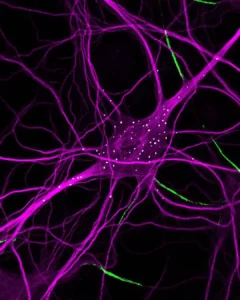
Neurotagging relies on neuroplasticity — the brain’s capacity to rewire itself through repeated activation. Each time a neural pathway is used, it becomes more efficient, accessible, and stable.
Cognitive neuroscience shows that goals are encoded not as fixed commands but as networks linking intention, emotional state, sensory cues, and context (ResearchGate). A goal “succeeds” when its associative network is strong enough to override competing habits or distractions.
This is why pairing a goal with recurring rituals — writing at a specific desk, training with a particular playlist, repeating affirming internal cues — improves adherence. You are strengthening the emotional and contextual tags that guide behavior.


How to Use Neurotagging for Productivity
Using neurotagging intentionally means engineering the cues, emotions, and contexts your brain associates with focused work. Instead of relying on motivation, you shape the neural conditions that make motivation easier to access.
- Pair goals with positive emotion: emotionally charged states have higher neural salience and are retrieved more easily (NCBI).
- Use consistent environmental anchors: place, lighting, objects, or time of day help the brain recognize “focus mode.”
- Reinforce through repetition: consistency strengthens neural consolidation (APA).
- Re-tag negative associations: reframing a stressful task with calming or rewarding cues weakens old patterns and builds new ones.
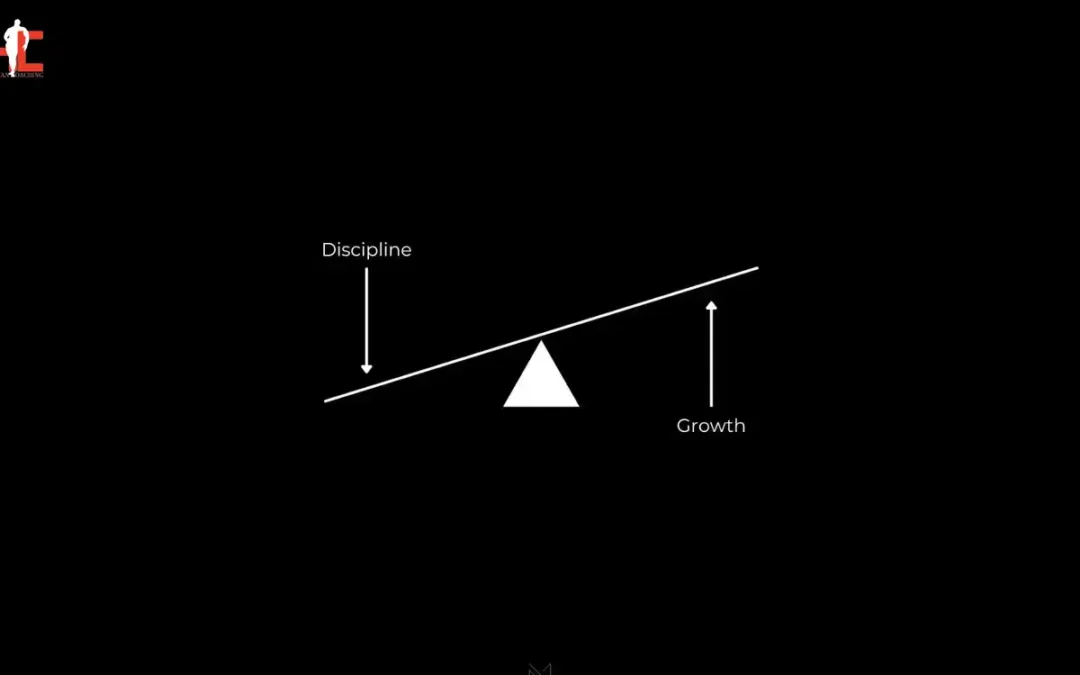
With practice, the nervous system begins to treat the desired state as the path of least resistance — the point where discipline becomes design.
How the Neuro Technique Works
The mechanism is straightforward: pair a specific internal state with consistent cues and positive affect. Through repetition, Hebbian plasticity (“neurons that fire together wire together”) binds these elements into a coherent pattern (Science Direct).
Each practice session strengthens the association between cue → emotional state → goal behavior. Over time, this makes goal-directed action feel more automatic and reduces cognitive load.
Neurotagging Step by Step
1. Define Your Goal-State (Be Specific and Vivid)
Get clear on the internal state you want to experience while pursuing or achieving your goal, not just the external outcome. Examples: “confident and focused while writing every morning” or “energized and strong at the 30-minute mark of my run.” Close your eyes and visualize the scene in detail. What do you see and hear? What sensations are in your body? Most importantly, what emotions are present — pride, excitement, calm? This vivid mental image is the target state your brain needs to lock onto.
2. Choose a Trigger or Cue for That State
Select one or two consistent cues that you will use every time you practice. These can be internal, like a phrase, gesture, or deep breath, or external, such as a playlist, a specific location, or an object associated only with that activity. Over time, these cues become the tag your nervous system associates with the whole goal-state experience.
3. Load the Goal-State with Positive Emotion
Emotion is the glue of memory. Recall a peak moment of pride or excitement and pour that feeling into your visualization; use music or movement to elevate your state; or reconnect with the deeper “why” behind your goal. The point is that your practice should not be flat — you want it to carry a real emotional charge. This engages the brain’s reward circuits and strengthens the association.
4. Practice and Repeat (Hebb’s Rule in Action)
Run through the sequence regularly: activate your cue, visualize the goal-state, load it with positive emotion, and stay in that state for one or two minutes. Consistency matters more than length. According to neuroplasticity research, repetition wires the pattern deeper. Make this part of your morning ritual, or use it as a quick reset before starting work or training.
5. Apply It in Real Situations (State-Dependent Cueing)
When it is time to act, use your cue to retrieve the trained state. Example: it’s 6 AM, you put on your running playlist, visualize crossing the finish line proud, and say “Let’s go!” Because you have rehearsed it, your brain recalls the state more easily. This is state-dependent memory: making the real-world context feel like the practice sessions so that focus and motivation carry over.
6. Reinforce with Immediate Rewards (Optional but Powerful)
Close the loop by rewarding yourself after successfully using your neurotagged state. Acknowledge it (“Yes, I did it!”), give yourself a small treat, or simply savor the progress. This follows the habit loop of cue → routine → reward. In early stages, consciously celebrating wins accelerates the conditioning process. Over time, the progress itself becomes intrinsically rewarding.
Throughout these steps, keep your tone compassionate and curious with yourself. You are essentially coaching your own brain. If you miss a day or two, just restart — every run-through strengthens the neural links and makes the desired state easier to access when it matters most.
Final Thoughts
Neurotagging shows that focus and productivity depend less on motivation and more on how well your goals are embedded into the brain’s associative networks. By pairing cues, emotions, and repetition, you transform high-performance states into accessible defaults.
With time, progress stops feeling like effort and starts feeling like alignment; a nervous system calibrated for the life you want to build.
FAQs
What is neurotagging in simple terms?
Neurotagging is the process of linking a desired goal-state to specific cues and emotions so that your brain learns to recall that state automatically.
Is neurotagging backed by science?
Yes. Research on neuroplasticity and associative learning shows that repeated cue–state–emotion pairings strengthen neural pathways, making behaviors more automatic.
How is neurotagging different from regular visualization?
Visualization alone can feel abstract. Neurotagging adds consistent cues and emotional intensity, which engages the brain’s reward systems and makes the association much stronger.
Can anyone use neurotagging, or is it only for high performers?
Anyone can benefit. Athletes and executives use it for performance, but students, professionals, and anyone working on habits or focus can apply the same steps.
How long does it take for neurotagging to work?
With daily practice, many people notice changes in focus and motivation within a few weeks. The key is consistency — neurons that fire together wire together.
What if I forget to practice neurotagging?
It is normal to miss days. Each time you restart, you reinforce the association a little more. The brain adapts with repetition, not perfection.

Comments and Questions
0 Comments